Obsidian DEX Infrastructure Overview
Understanding the structural integrity of the Obsidian DEX protocol requires looking past the marketing gloss and examining the underlying mechanics that drive execution. In the current DeFi landscape, where slippage and MEV (Maximal Extractable Value) often erode trader profits, the distinction between a standard AMM and a purpose-built DEX is stark. Obsidian positions itself not just as a liquidity pool, but as an execution layer designed to minimize friction for high-stakes financial analysis and trading.
The core infrastructure relies on a hybrid model that blends automated market maker (AMM) efficiency with limit-order book precision. This approach addresses the common pain points of traditional DEXs, such as impermanent loss for liquidity providers and high gas fees for frequent traders. By offloading certain order-matching tasks to off-chain or layer-2 solutions before final settlement, the protocol aims to maintain deep liquidity without the associated overhead.
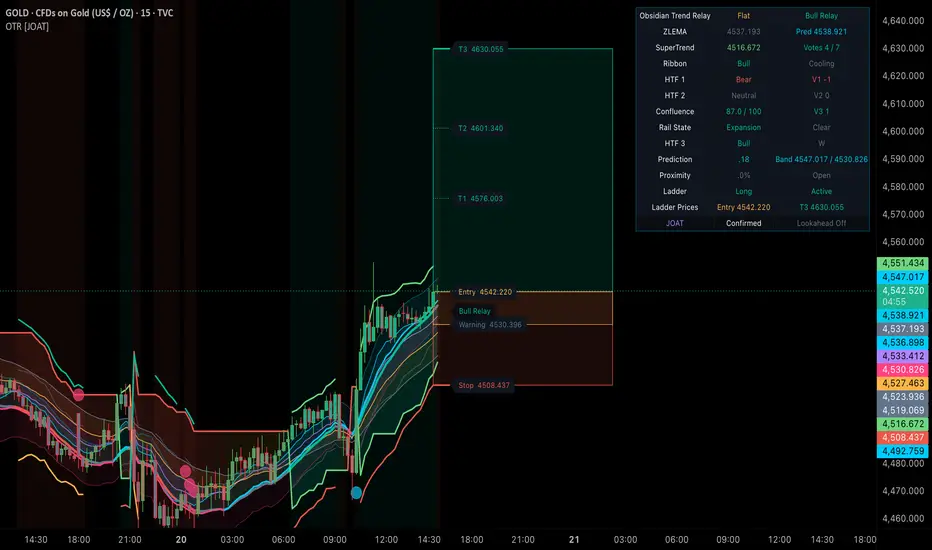
To establish a baseline for technical analysis, it is essential to visualize the primary trading pair's behavior. The chart below provides a provider-backed view of the token's recent performance, highlighting volume spikes and liquidity depth that are critical for understanding execution quality. This data serves as the foundation for evaluating how the DEX handles market volatility in real-time.
Latency and execution mechanics
Understanding how an order travels from your terminal to the blockchain is the difference between a profitable trade and a failed one. In decentralized exchanges, "latency" isn't just about internet speed; it is a complex interplay of mempool congestion, validator selection, and the specific routing logic employed by the protocol. For active traders, these technical factors directly dictate slippage and fill rates.
The Mempool Bottleneck
When you submit a transaction, it does not go directly into a block. It enters the mempool—a waiting room of unconfirmed transactions. During high volatility, this queue becomes congested. Your order sits there until a validator picks it up. If you are using a standard public RPC endpoint, you are competing with every other retail trader. This is why professional traders often use private RPCs or specialized relayers that bypass the public mempool, reducing the time your order spends in limbo.
Order Routing and MEV
Decentralized exchanges often route orders through multiple liquidity pools to find the best price. This multi-hop process adds computational overhead. Additionally, the threat of Miner Extractable Value (MEV) bots means that if your large trade is visible in the public mempool, bots may front-run or sandwich your transaction. Advanced DEXs use techniques like commit-reveal schemes or private transaction pools to hide order intent until execution, protecting you from these predatory strategies.
Settlement Finality
The final step is settlement on the blockchain. Different networks have different block times and finality guarantees. A fast finality network reduces the window for price slippage between transaction submission and confirmation. However, speed often comes at the cost of decentralization. Traders must balance the need for rapid execution with the security guarantees of the underlying layer. Understanding this trade-off is essential for managing risk in high-stakes environments.
Liquidity depth and market impact
When executing large orders on Obsidian DEX, the depth of available liquidity determines whether you get filled at the quoted price or suffer significant slippage. Unlike centralized exchanges with deep order books, decentralized liquidity is often fragmented across multiple pools. This fragmentation means that a single large trade can slice through multiple price tiers, driving the execution price against your favor.
To understand the current risk profile, it is necessary to compare Obsidian DEX's liquidity metrics against major competing decentralized exchanges. The following table contextualizes Obsidian's market depth relative to industry standards, highlighting where large orders might face resistance.
As the data suggests, Obsidian DEX currently exhibits higher slippage for mid-sized institutional orders compared to mature protocols like Uniswap V3 or Curve. This is typical for newer or specialized DEXs where liquidity providers are less densely packed. For traders, this implies that breaking up large orders into smaller chunks or using limit orders may be necessary to minimize market impact.
Market makers are currently positioned to capture this spread. Their strategies often involve providing liquidity in concentrated ranges, which can lead to rapid liquidity depletion if the price moves quickly out of those ranges. This dynamic creates a volatile environment for large traders, where the cost of execution can spike dramatically during periods of high volatility or low overall volume.
For real-time price action and charting analysis, refer to the technical chart below. This provides a visual representation of recent price movements and volume, which are critical for timing your entry and exit points to avoid periods of low liquidity.
Strategic execution workflows
Executing trades on Obsidian DEX requires treating the platform not as a simple swap interface, but as a complex infrastructure layer. The goal is to navigate liquidity fragmentation and MEV (Miner Extractable Value) risks without sacrificing speed. This workflow prioritizes capital preservation through pre-flight checks and intelligent routing.
Before initiating any trade, assess the available liquidity for your specific token pair. Obsidian’s architecture aggregates liquidity from multiple sources, but thin pools can lead to significant slippage. Use the platform’s depth charts to ensure your trade size represents less than 0.5% of the available pool depth to maintain price stability.
Set your slippage tolerance based on market volatility. For stable pairs, a 0.5% to 1% tolerance is standard. For volatile assets, increase this to 2-3% to account for price movement during the block confirmation time. Never set slippage to zero; this guarantees transaction failure in fast-moving markets, leaving your capital stuck in the mempool.
Obsidian DEX integrates with private transaction relays to shield your trades from front-running bots. Ensure the "MEV Protection" or "Private Relay" toggle is active in your wallet settings before signing. This routes your transaction through encrypted channels, preventing bots from seeing your trade details and inserting a higher-bid transaction ahead of yours.

Submit the transaction and monitor the status in real-time. If the transaction remains pending for more than two block intervals, consider canceling it via your wallet’s nonce management features to avoid failed transaction fees. Once confirmed, verify the output amount matches your pre-trade calculation to ensure no unexpected fees were deducted.
No comments yet. Be the first to share your thoughts!