Obsidian Finance Platform Overview
Obsidian Finance operates as a multi-chain DEX aggregator, designed to solve the fragmentation problem inherent in decentralized finance. When liquidity is scattered across dozens of chains and protocols, traders face high slippage and suboptimal execution. Obsidian’s infrastructure addresses this by querying multiple decentralized exchanges simultaneously to identify the best available trading rates. Instead of routing trades through a single venue, the system intelligently selects the most efficient path, often splitting orders across sources to minimize market impact.
This approach transforms the user experience from a manual hunt for liquidity into an automated execution process. The platform’s smart aggregator system handles the complexity of cross-chain routing and liquidity pooling, ensuring that traders receive the most competitive prices available in the current market. By abstracting away the need to manually check individual DEXs, Obsidian reduces friction and improves capital efficiency for every transaction.
How Obsidian Routes Liquidity
Instead of forcing users to choose between Uniswap, SushiSwap, or Curve, the platform acts as a smart routing layer that queries multiple decentralized exchanges simultaneously. The goal is straightforward: identify the best trading rates by splitting your order across various pools to minimize slippage and maximize execution quality.
The Aggregation Mechanism
When you initiate a swap, Obsidian’s smart aggregator doesn’t just look at the top-of-book price on a single exchange. It performs a real-time analysis of liquidity depth across supported chains and protocols. The system breaks your trade into smaller chunks and routes them through the most efficient paths. This process is akin to a logistics company finding the fastest combination of highways and local roads to deliver a package, rather than sticking to one congested route.
By comparing rates across different venues, the aggregator can often find a composite price that is significantly better than what any single DEX would offer for a large order. This is particularly useful in volatile markets where liquidity can dry up quickly on smaller pools. The technical infrastructure ensures that these queries happen in milliseconds, allowing traders to execute at prices that reflect the true market consensus rather than isolated pockets of liquidity.
Reducing Slippage Through Split Routing
Slippage occurs when there isn’t enough liquidity at a specific price point to fill your entire order. A large buy order on a single pool might push the price up before the trade is complete, costing you more than expected. Obsidian mitigates this by splitting large orders across multiple pools. For example, if you are swapping a large amount of ETH for USDC, the system might route 40% through Uniswap V3, 30% through Curve, and 30% through Balancer, depending on where the best combined rates are found at that exact second.
This split-routing strategy not only reduces slippage but also provides a buffer against sudden price movements during the transaction window. By leveraging the collective liquidity of the entire DeFi ecosystem, Obsidian ensures that traders get closer to the mid-market price. The result is a more predictable trading experience, where the execution price is less likely to deviate significantly from the quote provided at the start of the transaction.
Slippage mitigation in volatile markets
When liquidity is thin or price action is erratic, standard swap routes often result in significant slippage. Obsidian addresses this by moving beyond simple best-price aggregation. The infrastructure employs split routing, which breaks a single large order into smaller fragments and distributes them across multiple liquidity pools or DEXs. This approach minimizes the market impact of individual trades, ensuring that the final execution price stays closer to the intended rate.
Beyond routing, Obsidian integrates MEV (Maximal Extractable Value) protection mechanisms. In volatile markets, traders are often targeted by front-running bots that exploit the visibility of pending transactions. By obscuring transaction intent until execution or using private transaction relays, the protocol prevents predatory actors from capturing value at the user's expense. This protection is critical for maintaining fair pricing when market conditions are unstable.
The combination of split routing and MEV resistance creates a more robust execution environment. Instead of relying on a single path that might suffer from temporary illiquidity, the system dynamically adjusts to available depth. This reduces the variance in execution prices, allowing traders to maintain tighter control over their positions even when the broader market is experiencing sharp swings.
Multi-chain support and ecosystem integration
By connecting liquidity pools across disparate networks, the platform allows traders to execute swaps without manually bridging assets or managing multiple wallets. This infrastructure reduces the friction of cross-chain trading, turning a complex, multi-step process into a single transaction.
The efficiency of this approach depends on how well Obsidian aggregates liquidity. Instead of routing trades through a single chain, the protocol scans multiple networks to find the best execution price. This reduces slippage and minimizes the impact of low liquidity on smaller chains. For users, this means lower costs and faster settlement times, regardless of where the underlying assets reside.
To understand how Obsidian compares to other aggregators in terms of supported networks and fee structures, the table below outlines the key differences.
| Chain | Obsidian Support | Fee Structure | Liquidity Depth |
|---|---|---|---|
| Ethereum | Full | Variable | High |
| Arbitrum | Full | Variable | Medium |
| Optimism | Full | Variable | Medium |
| Polygon | Full | Variable | High |
| BSC | Limited | Fixed | Low |
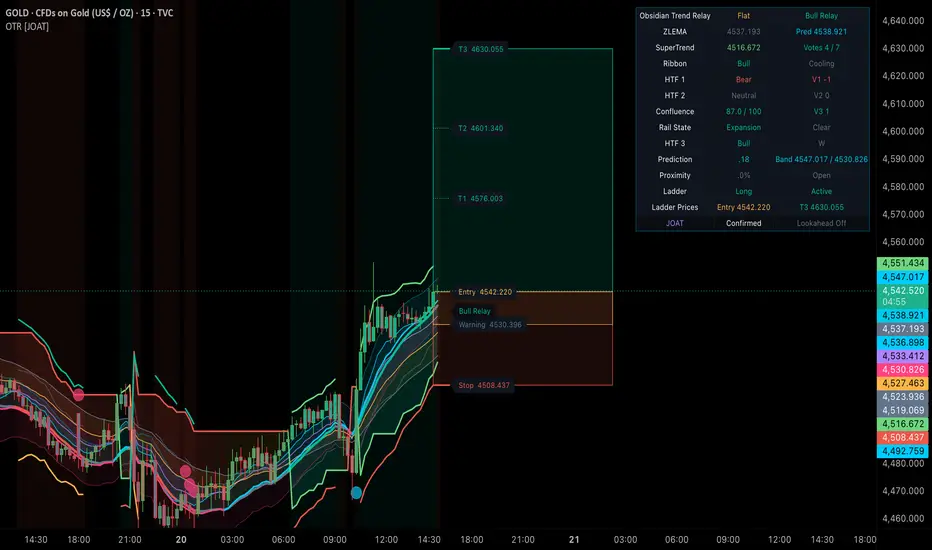
The technical chart below shows the price action of a relevant asset, illustrating the volatility that multi-chain aggregation helps mitigate by finding the best available price across networks.
Trading Checklist for Optimal Execution
Executing trades on Obsidian DEX requires more than just clicking "Swap." To minimize slippage and gas costs, follow this pre-trade checklist. Obsidian routes orders through the most efficient liquidity pools across supported chains [src-serp-2].
Verify Network and Gas Conditions
Before initiating a trade, check the current gas prices on your target chain. High congestion can erode profits, especially for smaller trades. Use a block explorer or gas tracker to identify low-traffic windows. If possible, schedule non-urgent swaps during off-peak hours to reduce transaction costs.
Check Liquidity Depth
Obsidian’s aggregation engine splits orders to find the best rates, but deep liquidity is still essential for large trades. Review the pool depth in the interface before confirming. Thin liquidity increases the risk of price impact, which can result in receiving fewer tokens than expected.
Confirm Slippage Tolerance
Set your slippage tolerance carefully. For stablecoin swaps, a tight tolerance (0.1%–0.5%) is usually sufficient. For volatile assets, you may need to increase it to 1%–3% to ensure the transaction completes. Setting it too high exposes you to front-running; setting it too low risks failed transactions.
Review the Route and Fees
The final step is to review the aggregated route. Obsidian will display the path your trade takes across different protocols. Ensure the estimated output matches your expectations and that the fees (gas + protocol fees) are acceptable. Once confirmed, sign the transaction and wait for block confirmation.
No comments yet. Be the first to share your thoughts!