How Obsidian DEX Aggregation Works
Obsidian DEX aggregation functions as a routing engine rather than a traditional exchange. Instead of holding assets in a single pool, the protocol queries multiple decentralized exchanges simultaneously to identify the most efficient path for your trade. This approach ensures that users receive the best possible execution price by splitting orders across various liquidity sources.
The core mechanic relies on real-time rate comparison. When you initiate a swap, Obsidian’s smart aggregator scans available pools across supported chains. It calculates potential slippage and gas costs for different routes, then selects the path that minimizes fees and maximizes output. This dynamic routing is particularly valuable in volatile markets where liquidity can shift rapidly between platforms.
By sourcing liquidity from various decentralized exchanges, Obsidian reduces the risk of partial fills or unfavorable rates. The system prioritizes efficiency, ensuring that even large trades are executed with minimal market impact. This aggregation layer effectively lowers the barrier to entry for traders who would otherwise need to manually compare rates across multiple interfaces.
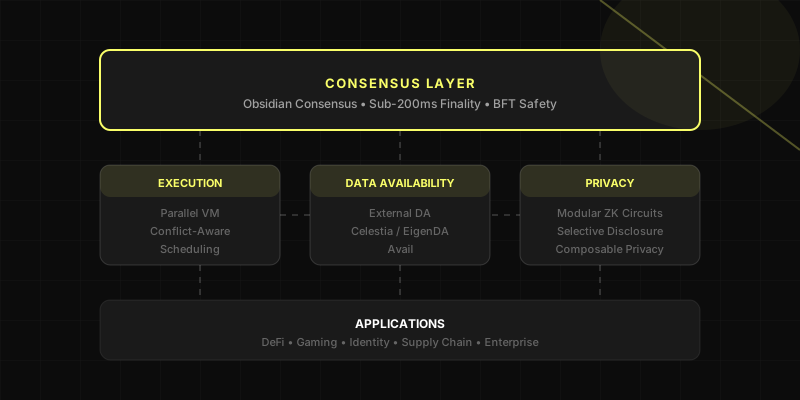
This infrastructure allows Obsidian to adapt to changing market conditions automatically. Whether you are swapping stablecoins or high-volatility assets, the aggregator’s logic remains consistent: find the best rate, minimize costs, and execute quickly. The result is a streamlined trading experience that leverages the collective liquidity of the broader DeFi ecosystem.
Cronos ecosystem integration
Obsidian DEX functions as a core liquidity hub within the Cronos blockchain, designed to consolidate fragmented trading activity into a single interface. By acting as a smart aggregator, it routes trades through multiple liquidity sources to secure the best possible execution prices for users. This aggregation is not merely a feature but the foundational mechanism that defines its role in the ecosystem, directly supporting the Obsidian DEX analysis focus on efficiency and depth.
The platform offers a unified suite of tools that extends beyond simple token swapping. Users can stake assets to earn yields or participate in governance, while the built-in launchpad provides a regulated environment for new projects to introduce tokens to the community. This integration reduces the need for users to navigate between disparate protocols, streamlining the experience on Cronos.
This approach to aggregation helps mitigate the risks associated with fragmented liquidity, a common challenge in newer blockchain ecosystems. By centralizing access to various pools, Obsidian ensures that traders can execute larger orders with minimal slippage, reinforcing its position as a primary infrastructure component for Cronos DeFi.


As an Amazon Associate, we may earn from qualifying purchases.
Community trading perspectives
While the on-chain metrics tell part of the story, the real test for any decentralized exchange is how traders actually use it. In the DeFi space, community sentiment often reveals friction points that audits miss, from slippage issues to interface confusion. For Obsidian DEX, the conversation on Reddit and Twitter highlights a specific utility: acting as a smarter routing layer rather than just another liquidity pool.
"The analysis gets squeezed out by everything else that feels more urgent. The Obsidian trading brain solves this permanently."
This observation from DeFi analyst Dami captures the core value proposition traders are discussing. Instead of competing directly for liquidity, Obsidian positions itself as the infrastructure that finds the best execution across the Cronos ecosystem. This distinction matters because it shifts the narrative from volume wars to efficiency wins.
Reddit threads on r/cro suggest that traders are increasingly valuing this multi-route capability. The consensus is that Obsidian’s aggregation reduces dependency on any single protocol, which is a significant risk mitigation strategy for users holding volatile assets. This isn't just about getting a slightly better price; it's about ensuring that trades actually execute during high-volatility periods when simpler DEXs might fail.
The technical community’s focus on the "trading brain" aspect suggests that Obsidian’s real advantage lies in its smart routing algorithms. Traders aren't just looking for liquidity; they are looking for the intelligence to navigate fragmented pools without losing value to spread and slippage. This perspective validates Obsidian’s approach as a necessary evolution for the Cronos DEX landscape.
Execution strategy checklist
Getting the best rate on Obsidian isn’t just about clicking "Swap." It’s about understanding how the aggregator splits your order across multiple liquidity pools. If you treat the interface as a black box, you might miss subtle savings or expose yourself to unnecessary slippage. Use this checklist to ensure your trades execute exactly how you intend.
Before confirming, check the route breakdown. Obsidian queries multiple DEXs to find the optimal path. Ensure the primary source listed is a reputable protocol you trust, rather than an obscure pool with low depth. The interface should show which exchanges are contributing to your rate.
Default settings often fail during high volatility. If you are trading a volatile altcoin, increase your slippage tolerance slightly to prevent transaction failures. However, never set it so high that you accept a bad rate. A 1-2% tolerance is usually safe for major pairs; adjust based on the asset’s typical daily range.
High-stakes trading requires protection against front-running. Confirm that your transaction is routed through a private relay or uses a MEV-resistant mechanism if supported by the current Obsidian build. This ensures your trade price isn’t manipulated by bots scanning the mempool before your block confirmation.
Obsidian displays an estimated price impact before you sign. If the impact exceeds your comfort zone, consider splitting your order into smaller chunks. Large orders can drain liquidity pools, driving up your average entry price. Smaller, staggered trades often result in a better final execution price.
No comments yet. Be the first to share your thoughts!