Market structure and execution risks
Trading on decentralized exchanges requires understanding that volatility is not just a price movement—it is a structural threat to your capital. In high-stakes finance, the difference between a profitable trade and a failed one often comes down to how the underlying market structure handles liquidity during rapid price swings. When you execute a swap on a volatile asset, you are not just betting on direction; you are betting on the resilience of the automated market maker (AMM) or order book you are interacting with.
Standard execution models frequently fail in these environments because they assume a level of liquidity that simply does not exist during flash crashes or sudden pumps. As prices move, the depth of the order book thins out, causing slippage to accelerate exponentially. This is where the distinction between a robust infrastructure like Obsidian DEX and a standard pool becomes critical. Without advanced routing or dynamic fee adjustments, your limit orders can slip significantly past your intended entry or exit, turning a small market move into a large financial loss.
The cost of this slippage is often invisible until the transaction is confirmed. You might see a price on your screen, but by the time the block is mined, the market has moved, and you are left with fewer tokens than expected. This is the primary risk in volatile DeFi markets: the gap between quoted price and executed price widens unpredictably. To navigate this, traders need tools that account for this structural friction, ensuring that execution remains precise even when the market is chaotic.
Current Market Context
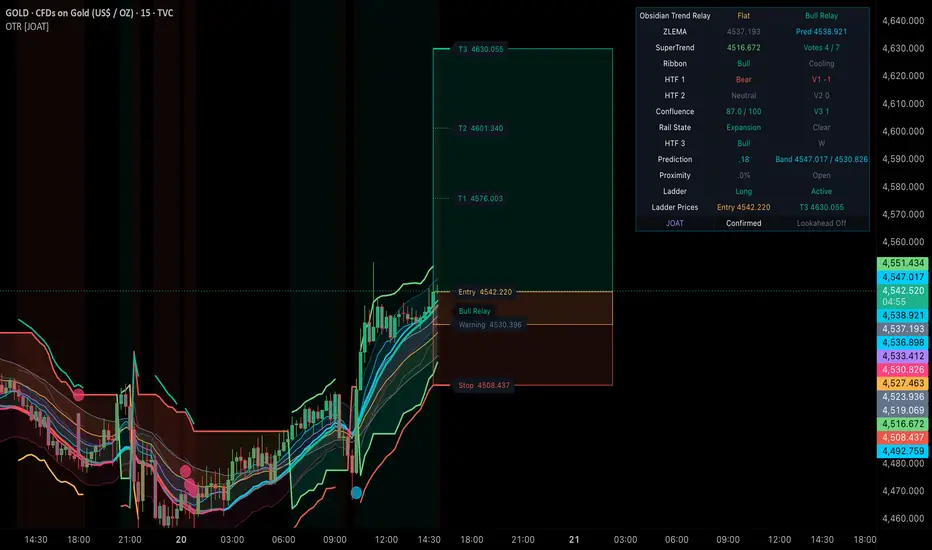
To understand why standard execution fails, look at the current behavior of major volatile assets. The charts below illustrate how quickly liquidity can evaporate during high-volatility periods, creating the exact conditions where naive trading strategies break down.
How Obsidian DEX infrastructure reduces slippage
When volatility spikes, the difference between a clean fill and a costly reversion often comes down to the underlying routing logic. Standard decentralized exchanges typically rely on a single pool or a limited set of direct pairs. In turbulent markets, this narrow liquidity funnel forces trades through thinner order books, resulting in significant price impact. Obsidian DEX operates differently by functioning as a liquidity aggregation layer. Instead of relying on isolated pools, it scans multiple sources simultaneously to construct the most efficient path for your transaction.
The core advantage lies in how Obsidian DEX splits and routes orders. By breaking a large trade into smaller fragments and distributing them across various liquidity venues, the system minimizes the pressure on any single pool. This fragmentation prevents the "slippage spiral" common in standard DEXs, where the first portion of a trade moves the price unfavorably for the rest. The result is a more stable execution price that stays closer to the mid-market rate, even when volume is high.
To understand the practical difference, consider how standard routing compares against Obsidian's aggregation model. The table below highlights the structural differences in how these systems handle liquidity and fill rates during volatile conditions.

| Feature | Standard DEX Routing | Obsidian DEX Infrastructure |
|---|---|---|
| Liquidity Source | Single Pool or Limited Pairs | Multi-Source Aggregation Layer |
| Trade Execution | All-or-Nothing in One Pool | Split Across Multiple Venues |
| Slippage Control | High Impact on Large Trades | Minimized via Fragmentation |
| Fill Rate | Variable, often partial in volatility | Higher completion rate |
This infrastructure isn't just about speed; it's about precision. By abstracting the complexity of finding the best path, Obsidian DEX ensures that your execution remains consistent regardless of market noise. This is particularly valuable for high-stakes finance where every basis point of slippage matters.
Watch live price action and volatility signals
Before you place a trade on the Obsidian DEX, you need to see where the market is actually moving, not just where it was an hour ago. Volatility isn’t just noise; it’s the friction that determines your slippage. When the market is choppy, a static limit order might sit unfilled while the price runs away from you. When it’s trending, chasing can leave you holding the bag at the top.
The Obsidian DEX guide emphasizes that execution strategy must adapt to these real-time shifts. A high-volume asset like BTC behaves differently than a low-liquidity altcoin. One might offer tight spreads with sudden spikes, while the other might drift with wide gaps. Understanding this distinction helps you choose between a market order for speed or a limit order for precision.
Use the live chart below to gauge immediate momentum. Look for volume spikes accompanying price moves—these confirm the trend. If price is rising but volume is dropping, the move is likely weak and prone to reversal. This is the kind of signal that tells you to tighten your stop-losses or hold back from entering a new position.
Pair this visual context with the current price data to set your entry and exit points. If the RSI is overbought, even a strong upward trend might be due for a pullback. In that scenario, waiting for a dip on the Obsidian DEX is often smarter than buying the breakout. Always let the live data dictate your timing, not your gut feeling.
Strategies for low-slippage entry
Volatile markets punish hesitation. When liquidity dries up, even small trades can drift significantly from your target price. To execute on the Obsidian DEX guide without losing value to slippage, you need to adjust your parameters before the market moves.
Slippage tolerance defines the maximum price difference you accept between the moment you confirm a trade and when it settles. In calm markets, 1% is standard. In high volatility, widen this to 3-5% to ensure your transaction doesn't fail due to rapid price shifts. A failed transaction wastes gas fees; a failed fill leaves you out of position.
Market orders execute immediately at the best available price, which can vary wildly in thin order books. Switch to limit orders to specify your exact entry price. This prevents you from buying the top of a pump or selling the bottom of a dump, though it may take longer to fill.
Before entering, check the liquidity pool depth. If the pool is shallow, your trade will move the price significantly. Wait for deeper liquidity or split your order into smaller chunks to minimize market impact.
Avoid trading during major news events or high-volume spikes. Enter positions during quieter market hours when spreads are tighter and price action is more predictable.
| Order Type | Execution Speed | Slippage Risk | Best Use Case |
|---|---|---|---|
| Market Order | Immediate | High | Small trades in deep liquidity |
| Limit Order | Delayed | None | Large trades or volatile markets |
| Stop-Limit | Conditional | Medium | Risk management on existing positions |
The goal is control. By configuring your Obsidian DEX guide settings proactively, you turn slippage from a random variable into a managed cost.
Risk management and position sizing
In volatile markets, your Obsidian DEX guide is only as good as your ability to survive the dips. Execution speed means nothing if a single slippage event wipes out your margin. You must treat position sizing not as an afterthought, but as the primary defense against market noise.
Start by defining the maximum percentage of your total capital you are willing to lose on any single trade. For high-stakes environments, this number should be small enough that a string of losses doesn’t force you out of the game. Never risk more than you can afford to see vanish while you wait for a block confirmation.
Slippage is the silent killer in decentralized exchanges. When liquidity is thin, your order size becomes the variable that determines your fate. Use limit orders or specialized routing tools to cap your maximum acceptable price impact. If the market moves against you faster than you can react, your pre-set stop-losses should trigger automatically, preserving the bulk of your portfolio.
Finally, remember that no algorithm can predict black swan events. The best risk management strategy is diversification across different protocols and asset classes. Don’t put all your liquidity in one pool. By spreading your exposure, you ensure that a failure in one corner of the DeFi ecosystem doesn’t sink your entire ship.
No comments yet. Be the first to share your thoughts!