What Obsidian Finance Actually Does
Obsidian Finance solves the fragmentation problem inherent in decentralized finance by aggregating liquidity across multiple chains. Instead of forcing you to manually check individual exchanges, its smart system queries numerous decentralized exchanges (DEXs) simultaneously to identify the most competitive trading rates.
This infrastructure is critical because liquidity in DeFi is rarely pooled in one place. It is scattered across Ethereum, Arbitrum, Optimism, Base, and other networks. Without an aggregator, a trader might accept a worse price simply because the primary liquidity on their current chain is thin. Obsidian bridges this gap by routing orders through the optimal path, regardless of which chain holds the deepest liquidity.
The platform’s core value proposition is simple: better execution through intelligent routing. By treating liquidity as a unified pool rather than isolated silos, Obsidian reduces slippage and improves fill rates. This is not just a convenience feature; it is an infrastructure necessity for anyone trading significant volumes in a fragmented market.
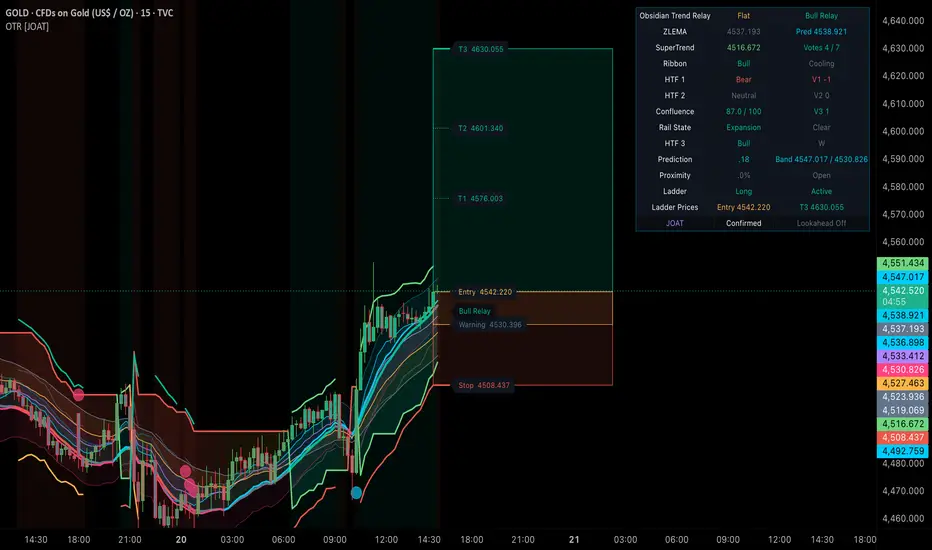
To understand the market context in which Obsidian operates, it helps to look at the asset it primarily facilitates. The following chart visualizes the ETH/USDC pair, a common benchmark for liquidity depth and trading activity across the chains Obsidian supports.
How Obsidian Routes Liquidity
Obsidian treats the entire DeFi landscape as a single, unified market. When you initiate a swap, the system queries multiple decentralized exchanges (DEXs) simultaneously to identify the best trading rates. This approach allows traders to access depth that no single protocol can offer alone.
The core mechanism relies on intelligent order splitting. Obsidian’s smart aggregator doesn’t just look for the cheapest path; it breaks your trade into smaller chunks. These fragments are routed across different venues—such as Uniswap, SushiSwap, or Curve—depending on where liquidity is deepest at that exact second. By splitting the order, the system minimizes slippage, ensuring you get closer to the mid-market price even for large transactions.
This process happens in milliseconds. The aggregator evaluates gas costs, exchange rates, and pool balances to construct the optimal execution path. If routing 100% of a trade through one DEX would cause a 2% price impact, Obsidian might split the order: 60% through DEX A, 30% through DEX B, and 10% through DEX C. The result is a tighter effective price for the user and less stress on individual liquidity pools.
| Feature | Direct Swap | Obsidian Aggregation |
|---|---|---|
| Liquidity Source | Single Protocol | Multiple DEXs |
| Slippage | Higher (concentrated) | Lower (split orders) |
| Price Impact | Significant for large trades | Minimized via routing |
| Gas Efficiency | Standard | Optimized path selection |
By abstracting away the complexity of manual routing, Obsidian ensures that every trade benefits from the combined liquidity of the broader ecosystem. This infrastructure is critical for maintaining efficiency in a market where liquidity is often siloed across dozens of different chains and protocols.
Handling Slippage in Volatile Markets
When markets swing sharply, standard automated market makers (AMMs) often suffer from high slippage, forcing traders to accept worse execution prices. Obsidian addresses this fragmentation by routing orders across multiple venues to find the most efficient path. Instead of relying on a single liquidity pool, the infrastructure dynamically adjusts to find the best available prices, minimizing the price impact that typically occurs during high-volatility events.
The core mechanism relies on real-time rate querying. Before executing a trade, the system scans available liquidity across supported chains and protocols. It then splits the order if necessary, combining the best available prices to reduce the overall cost. This dynamic routing ensures that even when a specific pool is thin or volatile, the trader receives a price closer to the market average rather than the distorted local rate.
By decoupling execution from a single liquidity source, the protocol effectively mitigates the risk of front-running and sandwich attacks that thrive in fragmented markets. The result is a more resilient trading experience where infrastructure mechanics, rather than luck, determine the final execution price. This precision is essential for maintaining capital efficiency when market conditions are unpredictable.
Multi-chain support and ecosystem integration
By connecting to a wide array of blockchain networks, Obsidian allows users to access liquidity without being locked into a single ecosystem. This infrastructure ensures that regardless of which chain you are using, you can find the best available rates for your trades.
The platform’s cross-chain capabilities extend beyond simple bridging. It actively monitors liquidity pools across different networks to route orders through the most efficient paths. This means that even if a specific token pair has low volume on one chain, Obsidian can find deeper liquidity on another, reducing slippage for the end user. The system acts as a unified interface, abstracting the complexity of managing assets across multiple blockchains.
Integration with various ecosystems is a core component of this strategy. Obsidian connects with major decentralized exchanges and liquidity providers on each supported chain, creating a comprehensive network of trading venues. This broad integration allows the aggregator to offer competitive prices and faster execution times. Users benefit from a seamless experience where the underlying infrastructure handles the heavy lifting of finding the best trade routes.
Trading checklist for optimal execution
To get the best rates, you must treat Obsidian as a routing engine rather than a simple swap interface. The infrastructure mechanics prioritize path optimization, meaning your execution strategy should align with the network’s liquidity depth.
Start by verifying the asset pair’s cross-chain availability. Obsidian’s strength lies in bridging fragmented pools, so high-volume pairs on secondary chains often yield better slippage than native mainnet swaps. Check the real-time price feed to confirm the aggregator has found a viable path across the intended networks.
Timing your trade around low-traffic windows can further reduce slippage. The aggregator’s routing algorithm performs best when network congestion is minimal. Avoid executing large orders during peak volatility unless the liquidity depth justifies the cost. A disciplined approach to timing and pair selection is essential for leveraging Obsidian’s infrastructure effectively.
Essential tools for DeFi traders
Trading on a multi-chain aggregator like Obsidian Finance requires a setup that prioritizes security and execution speed. You are interacting with smart contracts across different networks, so your hardware and software choices directly impact your capital safety and slippage results.
Hardware wallets
A hardware wallet is the foundation of any serious DeFi strategy. It keeps your private keys offline, ensuring that even if your computer is compromised, your assets remain secure. Look for devices that support the specific chains Obsidian aggregates, such as Ethereum, BNB Chain, or Polygon.


As an Amazon Associate, we may earn from qualifying purchases.
Browser and extension security
Your browser environment is the gateway to the DEX. Use a dedicated browser profile for DeFi activities to isolate your trading cookies and extensions from your personal browsing data. This reduces the risk of cross-site scripting attacks and keeps your session management clean.
Network monitoring tools
Before executing a trade, verify the network status and gas prices. Tools like Etherscan or BscScan provide real-time data on network congestion. Integrating these into your workflow helps you time your transactions for lower fees and faster confirmation, which is critical when leveraging Obsidian’s aggregation features.
No comments yet. Be the first to share your thoughts!